Service Dog Training
Just starting your journey?
Try working with a reputable organization if you qualify! Receiving a fully trained service dog is the easiest way to find a good working dog - these organizations do rigorous testing, training, and vetting before dogs are matched with handlers. All of the risks of a puppy needing to career change or retiring early due to physical or behavioral complications are taken by the organization, so it is much less stressful for the handler. Guide dogs in the USA is the gold standard for service dogs, but Canine companions for independence and Dogs for Diabetics are also extremely well known and respected, and cover far more disabilities. Be ware of scammers, though! There are unfortunately many programs who will charge you for an untrained, unvetted dog who is not a fully trained service dog. If you’re unsure, we are happy to help sleuth - we don’t want anyone to be taken advantage of by scammers!
Owner-trained Service Dogs
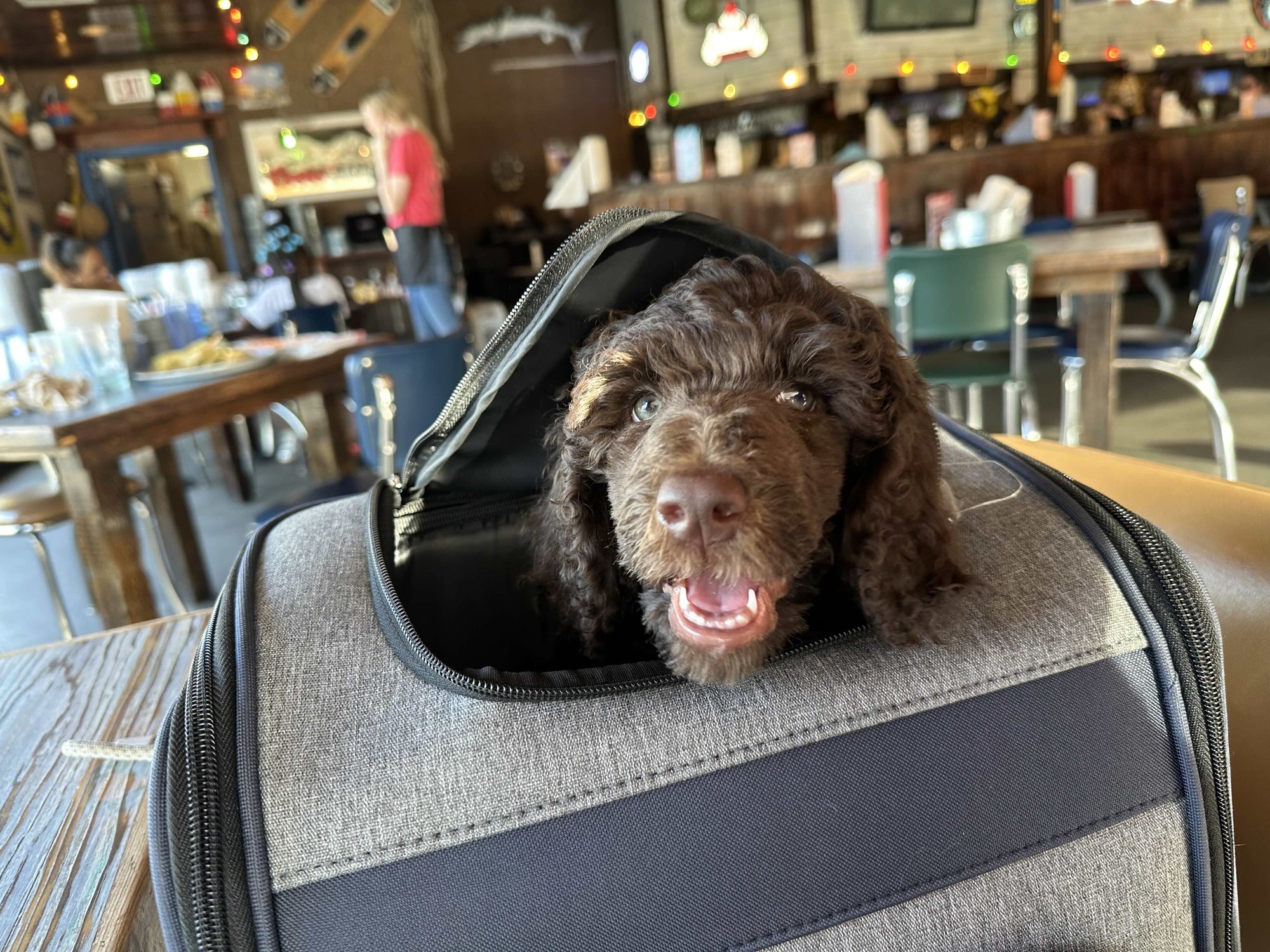
The hardest part of training a service dog is finding the right dog, so we recommend you work with a reputable breeder who can help match you with a puppy who shows an aptitude for environmental confidence, problem solving, biddability, and orthopedic soundness (conformationally correct). While any breed or mix can succeed at being a service dog, the breeds we most commonly see succeed are Labrador retrievers, golden retrievers, standard poodles, and collies. For medical alert tasks, size truly does not matter, but if any mobility tasks are a priority, a larger breed is required for the safety and longevity of the dog. Please remember that even if you do everything correctly, MOST puppies do not succeed at tasking in public - it is a huge responsibility! Be sure you have a plan for a puppy or young dog who needs to career change to be a pet.
Our Approach
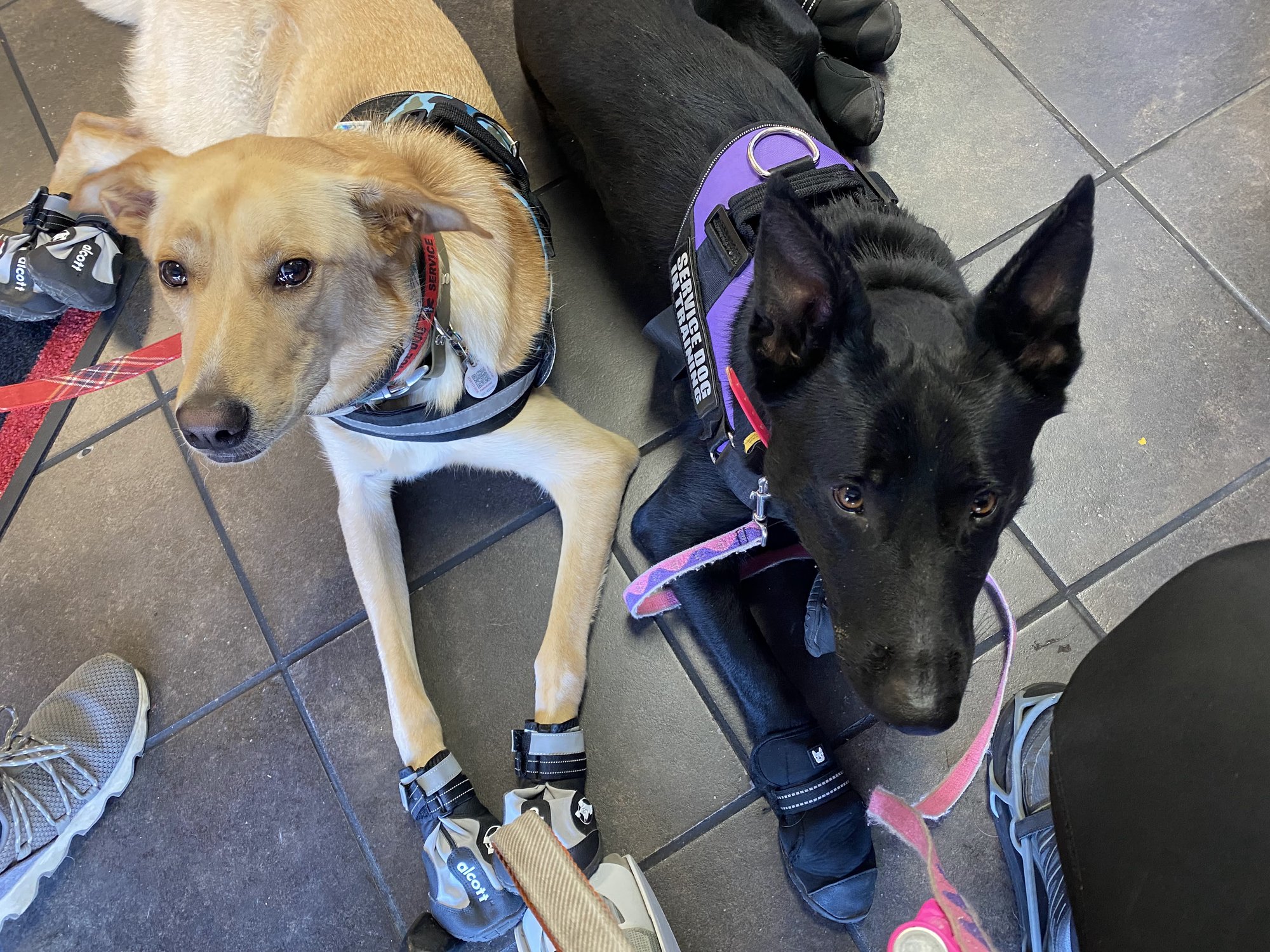
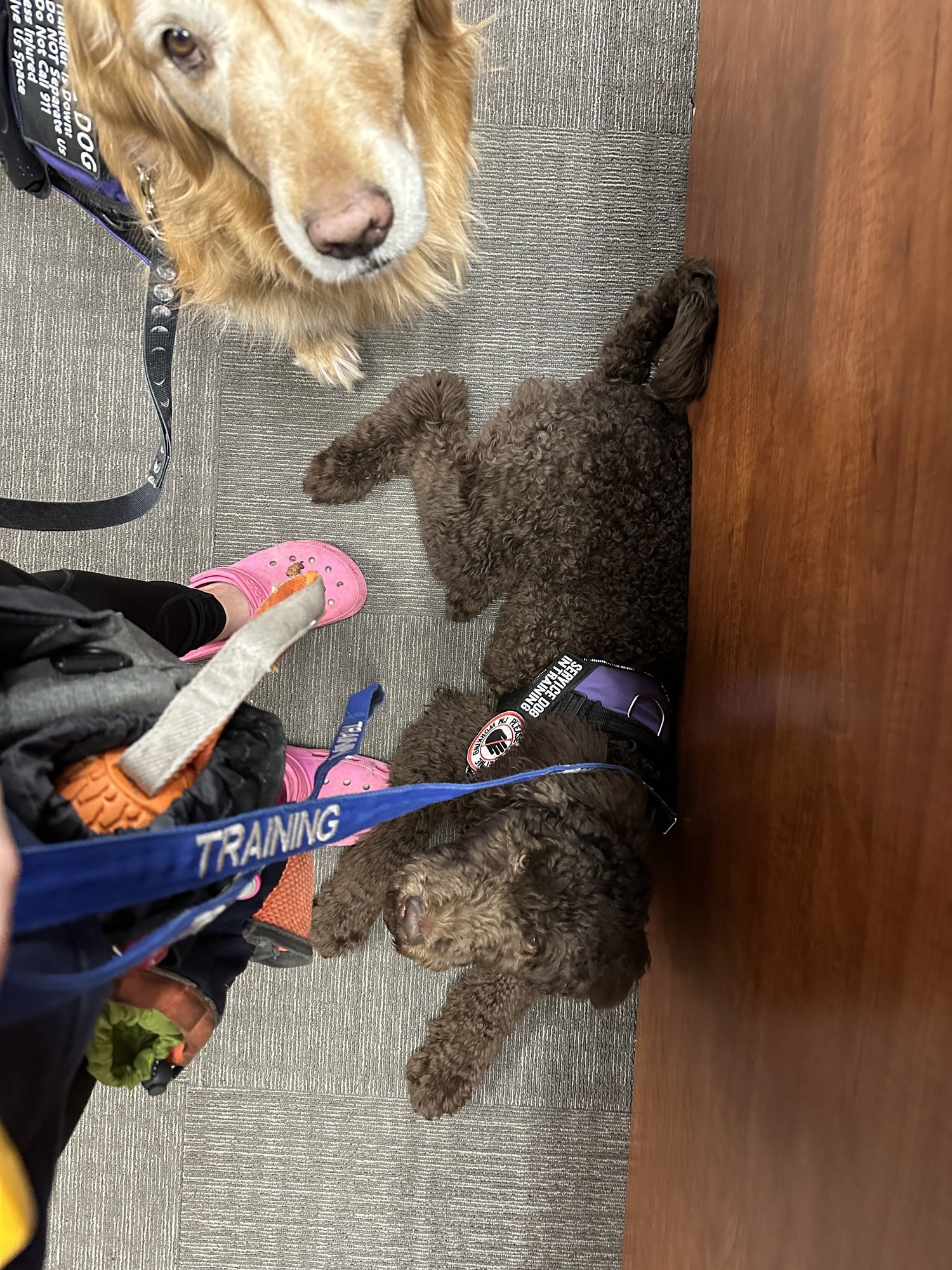
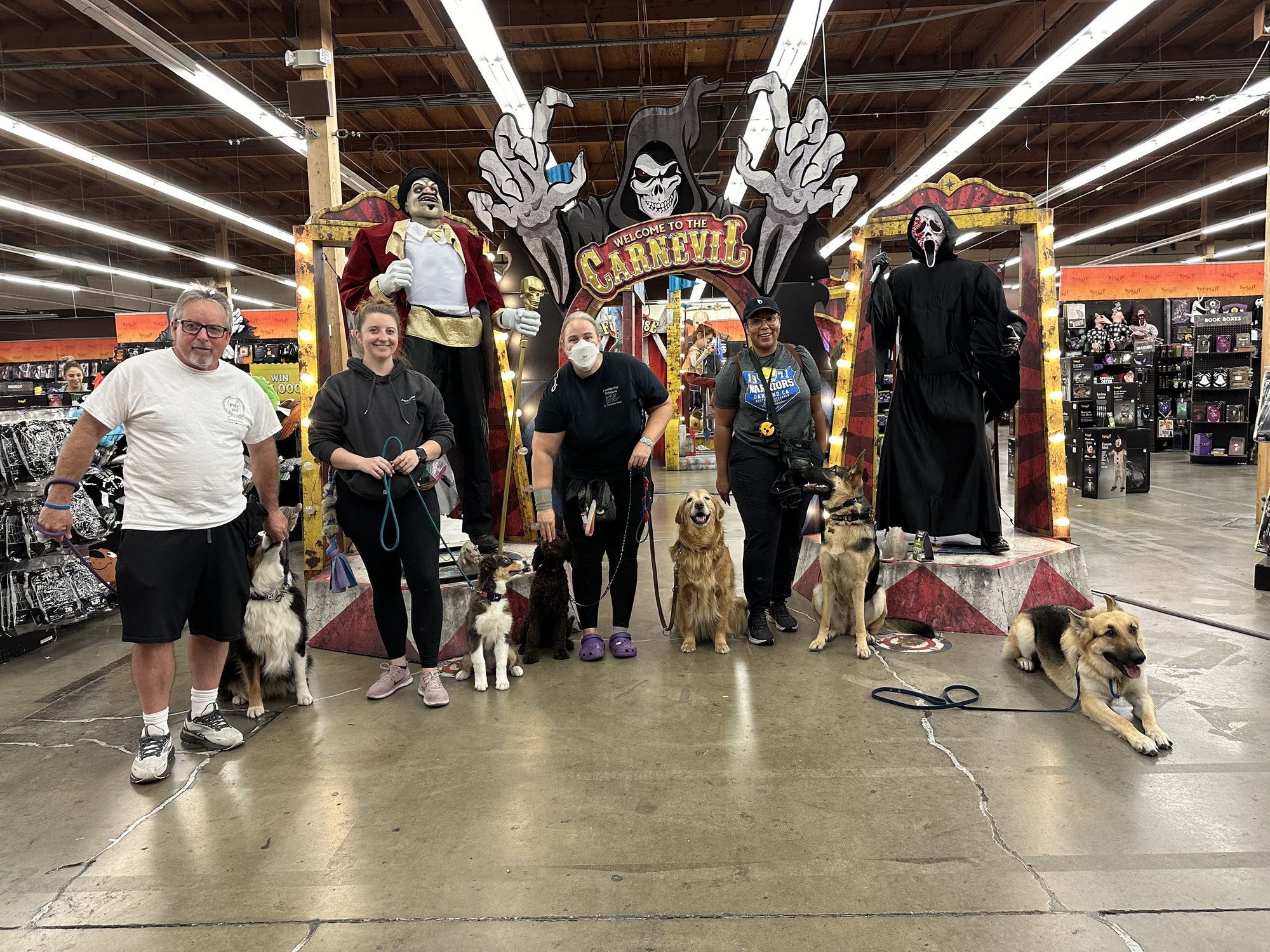
Because of Donnelly’s time volunteering with guide dogs, many of our group classes emphasize the core skills that help a service dog succeed - calmness, confidence, and focus. Independently, Donnelly has personally helped over a dozen teams complete their training to become working service dogs in the community. For service dogs in training, we recommend beginning with a private session where we can customize a training plan for you and your pup. As you develop your bond and skills as a team, we encourage you to attend group events/seminars/classes where we can improve general service dog skills. We emphasize handler focus, planned distractions, core cues (sit, down, stay/wait, come, tuck, heel, etc..), and role playing to strengthen handler confidence. Every team will face unique challenges and we love to connect handlers for better brainstorming and support during this intense process.
What we will NOT do
We will never ask you to explain your disability or needs to us. We only need to know basics to help train if you need assistance with specific tasks. We can not diagnose or verify any medical conditions, only a licensed medical provider can. We will not falsely represent pet dogs as service or assistance animals. We will not continue to work with a puppy or dog who is fearful or reactive in public settings - these dogs are stressed and should be career changed. We will not teach mobility tasks to dogs who are too young to safely perform said tasks, nor those who show any lameness/gait abnormalities or other physical limitations that could lead to the dog being injured.